How to Choose the Right Waterproofing Solution for Industrial Roofs
Industrial roofs face constant exposure to harsh weather, UV radiation, standing water, temperature fluctuations, and chemical pollutants. Without proper waterproofing, even minor roof damage can lead to costly repairs, operational downtime, and structural deterioration. Choosing the right waterproofing solution is therefore essential for protecting your facility and maximizing the lifespan of your roof.
In this guide, we’ll explore the key factors to consider when selecting an industrial roof waterproofing system and review the most common solutions available today.
Why Industrial Roof Waterproofing Matters
Unlike residential buildings, industrial facilities often contain expensive machinery, inventory, and sensitive production environments. Roof leaks can disrupt operations, damage equipment, and create safety hazards for employees.
An effective waterproofing system helps:
- Prevent water infiltration and structural damage
- Improve energy efficiency
- Extend roof lifespan
- Reduce maintenance costs
- Protect assets and inventory
- Enhance overall building performance
Investing in the right waterproofing solution can significantly lower long-term operational expenses.
Key Factors to Consider Before Choosing a Waterproofing System
1. Roof Type and Structure
Different roofing materials require different waterproofing methods. Common industrial roof types include:
- Metal roofs
- Concrete roofs
- Flat roofs
- Low-slope roofs
- Single-ply membrane roofs
Before selecting a solution, evaluate the roof’s structure, drainage performance, and current condition.
2. Climate and Environmental Conditions
Local weather conditions play a major role in waterproofing performance. Consider factors such as:
- Heavy rainfall
- Snow accumulation
- Extreme heat
- UV exposure
- High humidity
- Chemical exposure from industrial processes
For example, roofs in hot climates may require UV-resistant coatings, while facilities in rainy regions need superior water ponding resistance.
3. Durability and Lifespan
Industrial waterproofing systems vary greatly in service life. While some coatings last 5–10 years, premium membrane systems can provide protection for over 20 years with proper maintenance.
Evaluate:
- Expected lifespan
- Resistance to cracking and aging
- Flexibility under temperature changes
- Maintenance requirements
Choosing a durable system may involve higher upfront costs but can deliver substantial long-term savings.
4. Installation Complexity
Some waterproofing solutions require extensive surface preparation and specialized installation techniques. Others can be applied quickly with minimal operational disruption.
Consider:
- Installation time
- Facility downtime
- Labor requirements
- Safety considerations
For active industrial facilities, fast-curing and low-disruption systems are often preferred.
5. Budget and Long-Term Value
The cheapest option is not always the most cost-effective. Focus on total lifecycle cost rather than initial installation price alone.
A high-quality waterproofing system can:
- Reduce repair frequency
- Lower energy consumption
- Minimize production interruptions
- Extend roof replacement intervals
Common Industrial Roof Waterproofing Solutions
Liquid Waterproofing Membranes
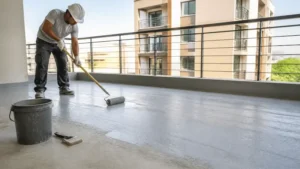
Liquid-applied membranes create a seamless protective layer over the roof surface. These systems are highly flexible and suitable for complex roof geometries.
Advantages:
- Seamless application
- Excellent flexibility
- Easy maintenance
- Suitable for irregular surfaces
Common materials include:
- Polyurethane coatings
- Acrylic coatings
- Silicone coatings
Bituminous Waterproofing Systems
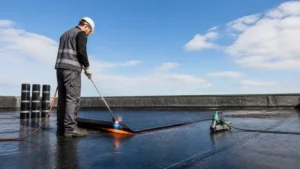
Bituminous membranes are widely used for flat and low-slope industrial roofs. They offer strong waterproofing performance and durability.
Advantages:
- Proven reliability
- Strong water resistance
- Good mechanical strength
However, installation may require heat application and professional expertise.
PVC and TPO Membranes
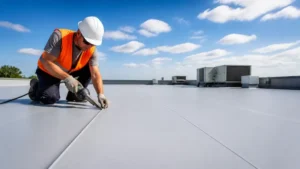
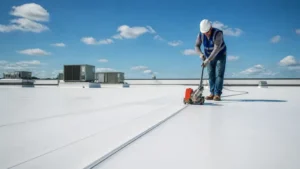
Single-ply membrane systems such as PVC and TPO are popular for large industrial buildings.
Advantages:
- UV resistance
- Energy efficiency
- Chemical resistance
- Long service life
These membranes are especially effective for facilities seeking sustainable roofing solutions.
Polyurethane Foam (PUF) Roofing
Spray polyurethane foam provides both insulation and waterproofing in one system.
Advantages:
- Seamless coverage
- Excellent thermal insulation
- Lightweight application
- Reduced energy costs
PUF systems are particularly useful for improving energy efficiency in industrial facilities.
Signs Your Industrial Roof Needs Waterproofing
If your roof shows any of the following signs, it may be time for waterproofing or restoration:
- Water stains on ceilings
- Ponding water
- Roof cracks or blistering
- Rust or corrosion
- Mold or mildew growth
- Increased indoor humidity
- Rising energy bills
Early intervention can prevent more serious structural damage.
Maintenance Tips for Long-Term Roof Protection
Even the best waterproofing system requires routine maintenance. To maximize performance:
- Schedule regular roof inspections
- Clean drainage systems frequently
- Repair minor damage immediately
- Remove debris and standing water
- Reapply protective coatings when necessary
Preventive maintenance helps extend the lifespan of your waterproofing investment.
Final Thoughts
Choosing the right waterproofing solution for an industrial roof depends on multiple factors, including roof type, climate conditions, durability requirements, and budget. A properly selected system not only prevents leaks but also improves operational efficiency and protects valuable assets.
Before making a final decision, consult experienced roofing professionals who can evaluate your facility’s specific needs and recommend the most suitable waterproofing solution.
With the right approach, industrial roof waterproofing becomes a long-term investment in safety, efficiency, and business continuity.
💬 Ready to Start Your Project?
[Chat with Us on WhatsApp for an Instant Quote]